
How to Handle Sexual Harassment Complaints at Workplace
Receiving a sexual harassment complaint at your workplace can feel daunting. Many employers panic, fearing the process will disrupt operations or create unnecessary conflict. However, under the Prevention of Sexual Harassment (POSH) Act and New Labour Code 2025, how you handle the complaint is critical—both for protecting the complainant and safeguarding your organization legally.
A fair, transparent, and legally compliant POSH inquiry isn’t bureaucracy; it’s the foundation of a safe workplace culture. This guide walks you through the process, highlighting common mistakes that land employers in legal trouble, and provides practical steps for conducting investigations that protect everyone involved.
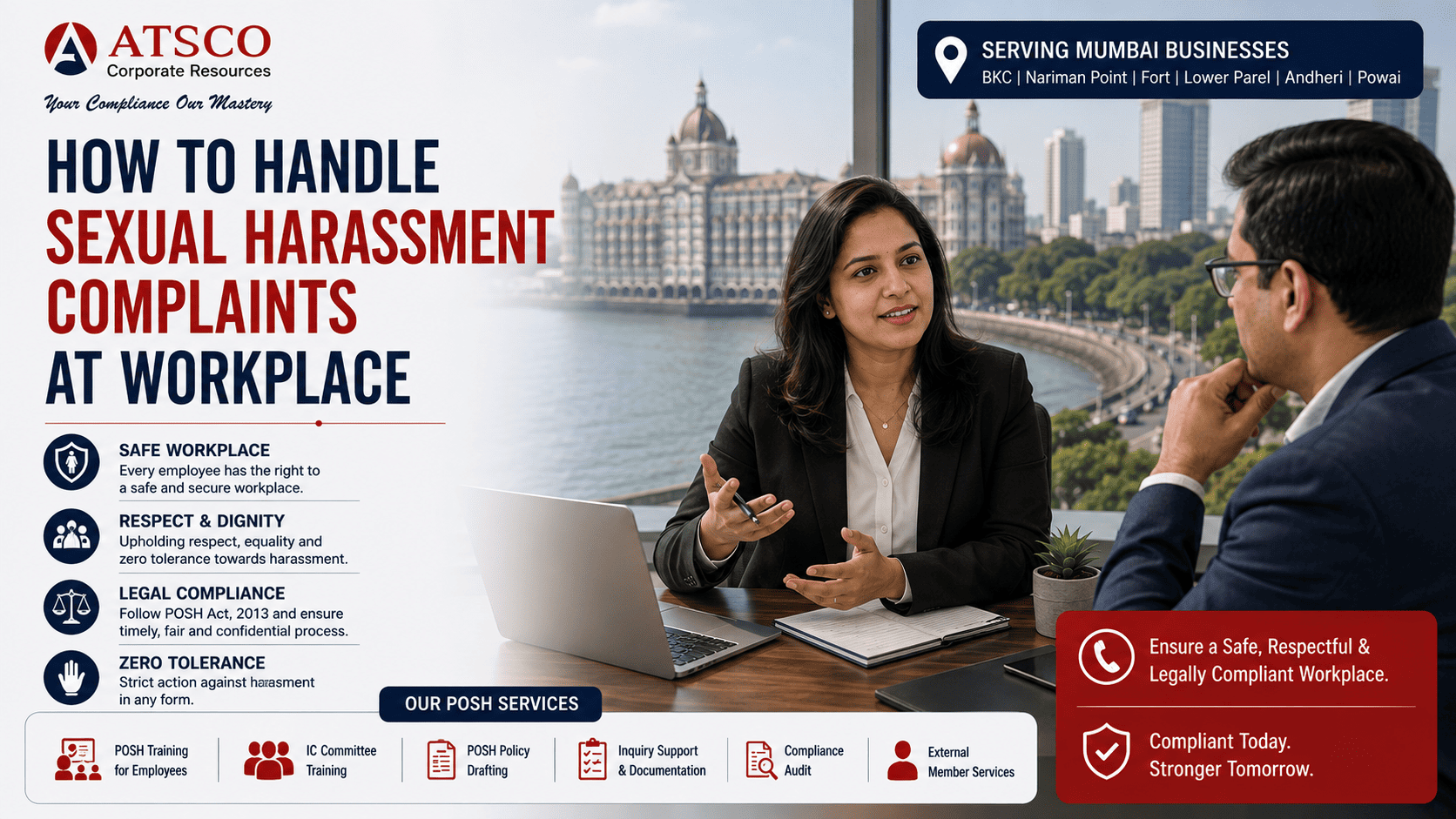
Understanding Your Legal Obligations
Before diving into inquiry procedures, understand your core legal obligations under POSH Act Section 13 and the new code:
Within 7 Days: Acknowledge receipt of the complaint to the complainant
Within 90 Days: Complete the investigation and submit findings to the employer
Simultaneously: Prevent any retaliation against the complainant
Confidentiality: Maintain absolute confidentiality throughout the process
These timelines aren’t suggestions—they’re legal mandates. Missing them constitutes non-compliance with potential penalties up to ₹50,000.
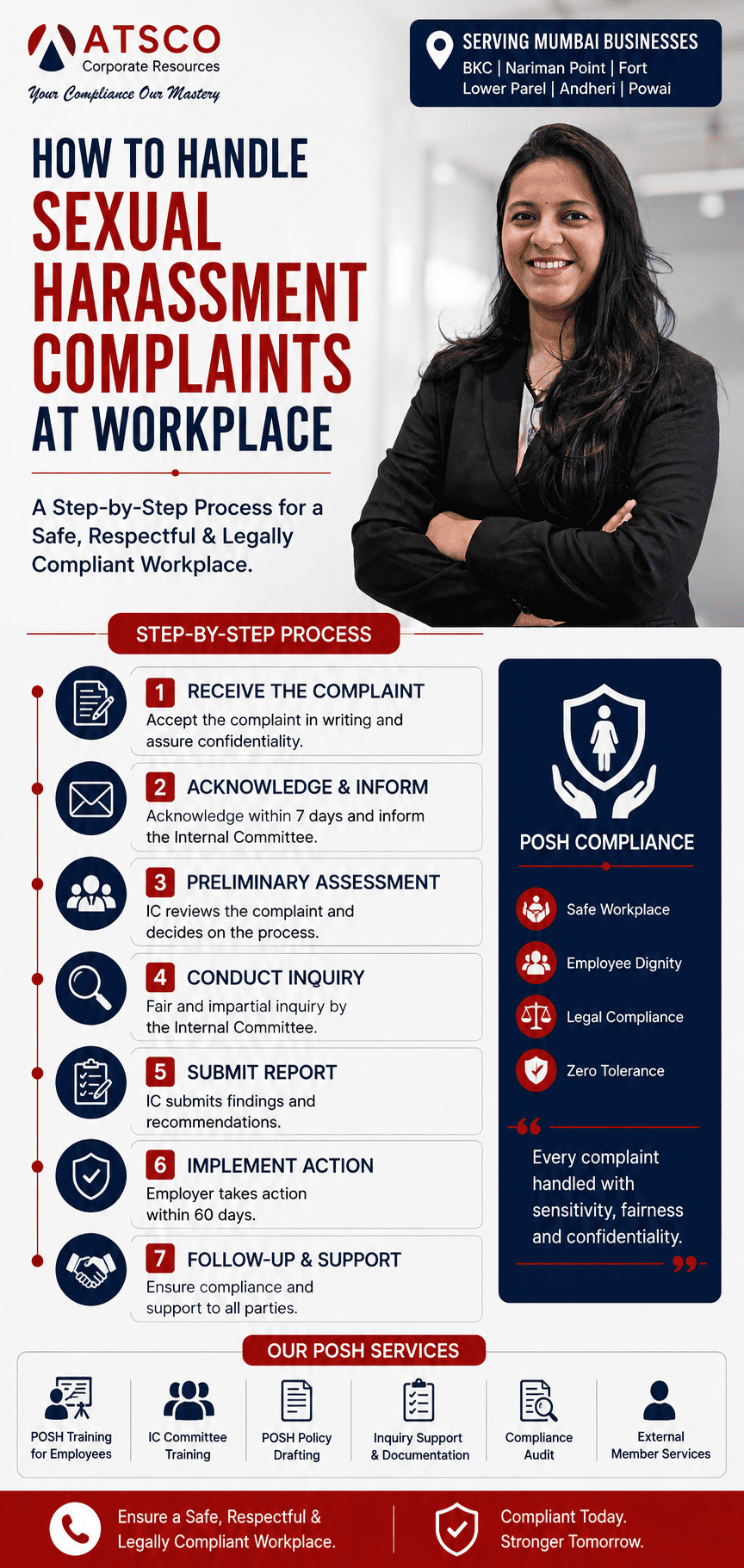
Step-by-Step POSH Inquiry Process
The Moment Someone Reports Harassment:
A complaint can come verbally, in writing, via email, or through your anonymous mechanism. Your first action must be documentation.
What to Do:
- Listen without judgment - Your role at this stage is hearing, not investigating.
- Take detailed notes - Date, time, complainant's name (if willing), nature of complaint, specific incidents.
- Provide written acknowledgment - Send formal letter within 7 days confirming receipt, investigation timeline, confidentiality commitment.
- Explain the process - Complainant should understand investigation steps, expected timeline, and confidentiality measures.
A Mumbai IT company received a harassment complaint on March 5th but didn't acknowledge it until March 20th (15 days late). During inspection, this breach was treated as non-compliance, resulting in ₹15,000 penalty despite later proving the investigation was fair.
Lesson: Acknowledge immediately, even if investigation will take time.
Before investigation even begins, take steps protecting the complainant from retaliation or further harassment.
Protective Actions:
- Separate work areas (if possible) - Don't force complainant to face accused daily during investigation.
- Leave flexibility - Allow complainant to take leave without affecting performance records.
- No performance penalty - Ensure complaints don't negatively impact appraisals, promotions, or salary.
- Communication channels - Direct reporting to ICC for any retaliation incidents.
- Workplace conduct briefing - Communicate to all staff that retaliation is strictly prohibited.
Prevention: Communicate immediately that retaliation is unacceptable and monitored.
The Internal Complaints Committee (ICC) leads the investigation. Ensure committee composition is appropriate:
ICC Composition Requirements:
- Minimum 4 members (1 external member is mandatory).
- At least 50% women representation.
- External member from women's organization or similar field (crucial for impartiality).
- No conflict of interest (ICC members shouldn't have direct authority over complainant or accused).
- All members have POSH training.
Critical Selection Principle: Select ICC members specifically for this investigation if it involves senior leadership or sensitive matters. Don't use the same ICC members who might have biases.
A Lower Parel corporate office used their regular ICC (which happened to be all friends of the accused manager) to investigate a harassment complaint against that manager. The investigation cleared him in 15 days with minimal inquiry. Later, the complainant filed an external complaint, creating significant legal complications and reputation damage.
Prevention: External investigation committees are best for impartial investigations, especially when complainant or accused holds senior positions.
Before interviewing anyone, plan your investigation strategy.
Scope Definition:
- What exactly is being alleged? (Define the specific incidents, dates, nature of harassment)
- What is NOT in scope? (Don't investigate unrelated complaints or hearsay)
- Expected investigation timeline (typically 30-45 days)
Evidence Collection Strategy:
- What documents will be reviewed? (Emails, chat messages, leave records, performance reviews)
- Who will be interviewed? (Complainant, accused, witnesses, relevant supervisors)
- Interview sequence (usually complainant first, then witnesses, then accused)
Confidentiality Protocol:
- Who has access to investigation files? (Only ICC members and authorized HR)
- How will sensitive information be stored? (Locked files, password-protected documents)
- What information will be shared with whom and when?
Documentation Requirements:
- How will interviews be recorded? (Notes, audio, video with consent)
- What format will findings take? (Detailed report with evidence and conclusions)
- How will recommendations be presented? (Separate disciplinary recommendations from findings)
Interviews are the investigation's core. Conduct them professionally and fairly.
Interviewing the Complainant:
- Conduct in private, safe environment
- Allow support person if complainant requests (colleague, counselor—not a witness)
- Ask open-ended questions initially ("Describe what happened")
- Then specific questions ("When exactly did this occur?" "Who witnessed it?")
- Document all responses verbatim or record with consent
- Don't dismiss emotions—harassment investigations are inherently emotional
- Allow time for detailed explanation—don't rush
What NOT to Do:
- Don't ask "Why didn't you report earlier?" (This interrogates rather than investigates)
- Don't question credibility based on emotional reactions
- Don't suggest the complainant might be mistaken about nature of harassment
- Don't make the complainant feel blamed
Interviewing Witnesses:
- Interview separately (don't let witnesses influence each other)
- Ask specific questions about what they directly witnessed
- Distinguish between direct observation and hearsay
- Document who said what, when, and how they know it
- Ask if witness observed retaliation or continued harassment
Interviewing the Accused:
- Provide complete details of allegations beforehand (right to know charges)
- Allow time for accused to prepare response
- Conduct in professional setting
- Present allegations clearly and ask for response
- Ask for accused's account of disputed incidents
- Document all responses
- Don't presume guilt based on complaint alone
After all interviews, analyze systematically:
Evaluation Framework:
- Incident Credibility - Is the allegation plausible? Do dates/locations make sense?
- Corroboration - Do witness accounts support complainant's version?
- Contradictions - Does accused's version contradict multiple credible witnesses?
- Documentary Evidence - Do emails, messages, or records support allegations?
- Pattern - Is this isolated incident or part of repeated behavior?
- Severity - How serious is the alleged harassment under POSH definitions?
Based on evidence analysis, the ICC reaches findings:
Possible Conclusions:
- Harassment Proven - Sufficient evidence that accused harassed complainant
- Harassment Partially Proven - Some aspects of complaint proven, others not
- Harassment Not Proven - Insufficient evidence to conclude harassment occurred
- False Complaint - Evidence suggests complainant fabricated allegations
Documenting Findings:
- Detailed report with evidence summary
- Reasoning for conclusions
- Direct quotes from interviews (where relevant)
- Witness corroboration details
- Separate section for recommended actions (not conclusions)
- Opportunity for complainant and accused to comment on findings
If investigation proves harassment, ICC recommends appropriate actions:
Possible Actions:
- Reprimand: Written warning placed in accused's file
- Training: Mandatory POSH/conduct training
- Suspension: Temporary suspension from duties (with or without pay)
- Transfer: Moving accused away from complainant's work area
- Demotion: Reduction in role or responsibility
- Termination: Dismissal from employment (for serious/repeated violations)
After reaching conclusions:
Communicate to Complainant:
- Share findings (can withhold identifying information about internal discussions)
- Explain recommended actions
- Provide appeal opportunity
- Confirm no retaliation commitment
- Offer counseling support
Communicate to Accused:
- Share findings and reasoning
- Explain recommended action and its rationale
- Provide appeal opportunity
- Clarify suspension/termination effective dates (if applicable)
Communicate to Organization:
- General communication confirming workplace safety commitment
- No details about specific case
- Retaliation policy reinforcement
- Support resources availability
Google Reviews by Clients


It has experienced & dedecated staff round the clock to give you prompt service without any hurdles.
*Best services*


A All
T Together
S Support
C Councilling for PF, ESIC, Employee and Company
O Office of sorting out problem of all
Come and share your problems as your compliments our Mastery
Conclusion: Fair Investigations Protect Everyone
Fair, transparent POSH inquiries aren’t soft on harassment—they’re rigorous investigations ensuring justice. Organizations that conduct systematic, documented, fair investigations build trust among employees and protect themselves legally.
Whether your organization is in BKC offices, Andheri manufacturing, or Ghatkopar retail, how you handle sexual harassment complaints defines your workplace culture. Do it right, and you create an environment where harassment is prevented and addressed. Do it wrong, and you create legal liability that could have been prevented.
Get Expert POSH Inquiry Support from ATSCO Corporate Resources
Conducting fair, legally compliant POSH inquiries requires expertise spanning investigation protocols, employment law, and procedural fairness. ATSCO Corporate Resources specializes in supporting Mumbai organizations through sensitive POSH investigations.
Our POSH Inquiry Services:
- Investigation protocol development
- Fair and impartial investigation conduct
- ICC member training and guidance
- Evidence collection and analysis
- Interview management
- Findings documentation
- Action recommendation
- Legal compliance verification
- Appeal mechanism support
- Retaliation prevention and monitoring
- Follow-up implementation tracking
We conduct investigations that are:
- ✓ Legally compliant with POSH Act requirements
- ✓ Fair to all parties (complainant, accused, organization)
- ✓ Thoroughly documented for inspection-readiness
- ✓ Confidential and professional
- ✓ Timely (completing within 90-day mandate)
Serving manufacturing units, IT companies, retail chains, hospitality businesses, healthcare facilities, and corporate offices across Mumbai and surrounding regions.
Why Choose ATSCO Corporate Resources?
Experience and Expertise
With 18 years of experience, ATSCO Corporate Resources is a trusted labour law consultancy firm, serving 50+ corporates across diverse industries
Comprehensive Services
Providing end-to-end functions of payroll services, including time and attendance management and leave processing
Skilled Team
Emphasize the expertise of the team in handling complex payroll issues