
POSH Inspections in Maharashtra - What Every Employer Must Do to Stay Compliant
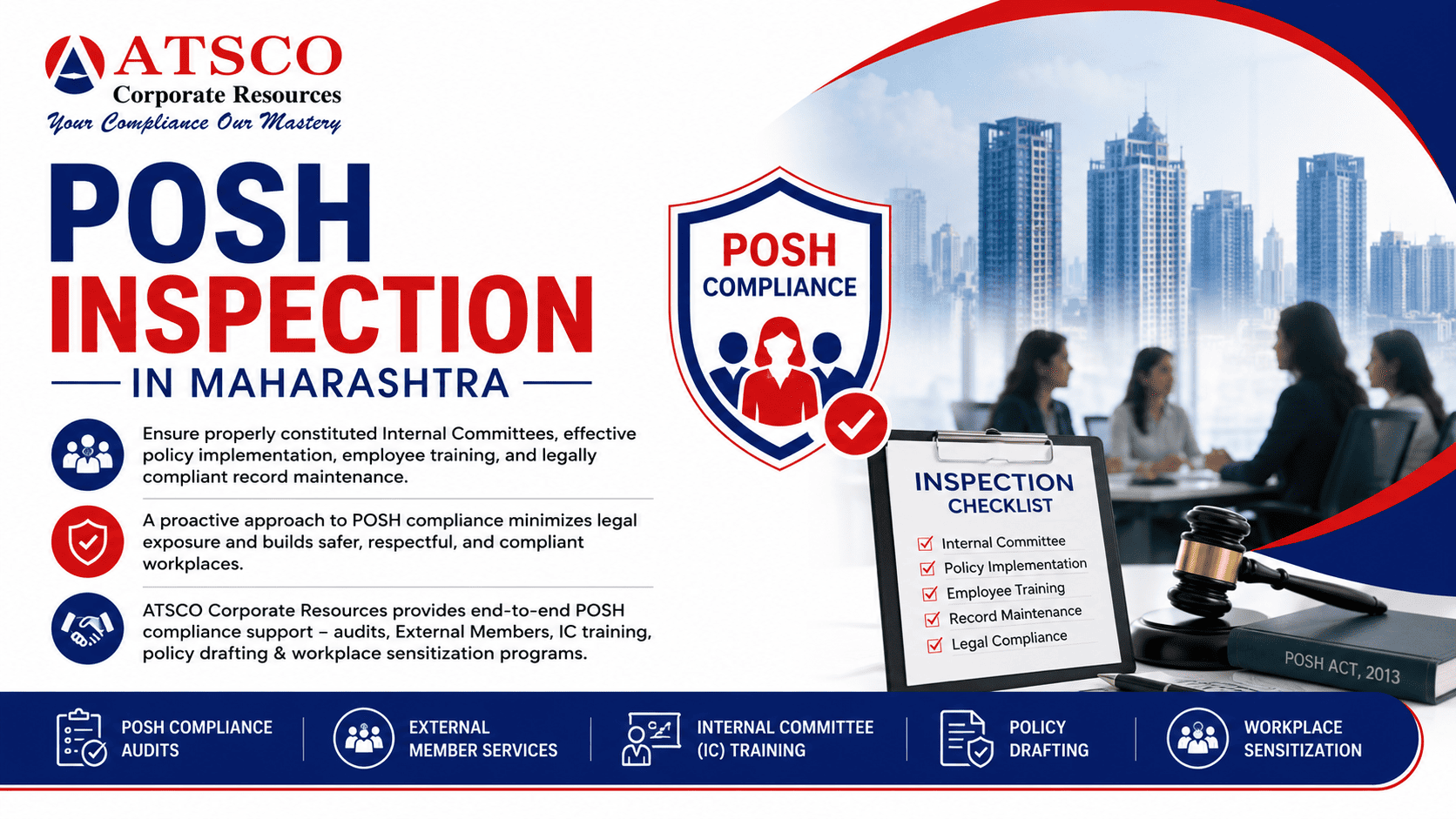
The enforcement landscape under the Sexual Harassment of Women at Workplace (Prevention, Prohibition and Redressal) Act, 2013 (“POSH Act”) is witnessing a major shift in Maharashtra. The State Government has now introduced a structured inspection mechanism empowering designated officers to verify POSH compliance across private, government, and semi-government establishments.
This development signals a transition from paper compliance to active regulatory scrutiny. Organizations can no longer afford to treat POSH compliance as a one-time documentation exercise. Employers must now ensure that their Internal Committee (“IC”), policies, reporting systems, training records, and grievance mechanisms are fully compliant and inspection-ready at all times, explained in this blog post, POSH Inspection in Maharashtra and precautions to be taken.
Background Behind the Recent POSH Inspection Circular
The recent circular issued by the Government of Maharashtra authorizes multiple officials under the Women and Child Development Department and district administration to conduct inspections under Section 25 of the POSH Act.
The move comes amid increasing concerns regarding workplace safety and implementation gaps under the POSH Act, especially after several widely reported workplace harassment incidents in Maharashtra. Authorities have emphasized that organizations must not merely constitute Internal Committees on paper but must demonstrate effective implementation of the law.
What Authorities May Verify During POSH Inspections
The inspection framework includes a detailed compliance checklist. During inspections, establishments may be required to produce records and documents relating to:
- Constitution of the Internal Committee under Section 4 of the POSH Act
- Appointment letters of IC members
- Presence of an External Member
- POSH Policy and its circulation among employees
- Display of POSH notices at the workplace
- Awareness and sensitization training records
- Complaint handling procedures
- Inquiry documentation and confidentiality safeguards
- Annual reports submitted under the Act
- Availability of grievance redressal mechanisms
- SHe-Box portal related compliance
- Details relating to remote and hybrid work environments
Authorities may also verify whether employees are aware of reporting channels and whether organizations have created a safe and accessible complaint mechanism.
Importance of Proper Constitution of the Internal Committee
One of the primary areas of scrutiny during inspections is likely to be the validity of the Internal Committee.
Under Section 4 of the POSH Act, every organization employing 10 or more employees is required to constitute an Internal Committee comprising:
- A woman Presiding Officer employed at a senior level
- At least two employee members
- One External Member familiar with issues relating to sexual harassment or women’s rights
Failure to include a valid External Member or improper constitution of the IC may render the committee legally defective.
Many organizations unknowingly remain non-compliant because their IC composition does not satisfy statutory requirements.
Google Reviews by Clients


It has experienced & dedecated staff round the clock to give you prompt service without any hurdles.
*Best services*


A All
T Together
S Support
C Councilling for PF, ESIC, Employee and Company
O Office of sorting out problem of all
Come and share your problems as your compliments our Mastery
Increased Focus on SHe-Box and Digital Compliance
Recent judicial developments have also strengthened the compliance obligations of employers.
In ongoing proceedings before the Supreme Court concerning nationwide implementation of the POSH Act, the Court has emphasized district-level verification of Internal Committees and directed authorities to strengthen compliance monitoring mechanisms.
The Court has also highlighted the role of the SHe-Box portal as part of compliance monitoring and transparency measures. Employers may therefore increasingly be expected to maintain updated compliance data and cooperate with inspections and verification processes.
Importantly, SHe-Box compliance does not replace statutory obligations such as filing annual reports or maintaining Internal Committee records.
Consequences of Non-Compliance
Non-compliance under the POSH Act can result in serious legal and reputational consequences.
Under Section 26 of the POSH Act, penalties may extend to monetary fines up to ₹50,000 for failure to constitute an Internal Committee or comply with statutory obligations. Repeated violations may attract higher penalties and additional regulatory consequences.
Recent judicial observations have also indicated that regulatory authorities may take stricter action against defaulting establishments.
Beyond legal liability, non-compliance can significantly impact employee trust, workplace culture, and organizational reputation.
Steps Organizations Should Immediately Take for POSH Inspection
In light of the recent inspection framework, employers should proactively review their POSH compliance systems. Organizations should:
- Review whether the Internal Committee is validly constituted
- Verify appointment and tenure of IC members
- Ensure the External Member satisfies statutory requirements
- Update the POSH Policy and circulate it internally
- Conduct periodic employee awareness sessions
- Conduct IC training and capacity-building programs
- Maintain proper inquiry documentation and confidentiality records
- Ensure statutory notices are displayed at the workplace
- Maintain annual reports and compliance records
- Review hybrid and remote workplace compliance mechanisms
POSH compliance should now be treated as an ongoing governance obligation rather than a reactive legal formality.
Conclusion
The Maharashtra Government’s inspection circular marks a significant compliance development under the POSH Act. The focus is now clearly on accountability, implementation, and demonstrable compliance.
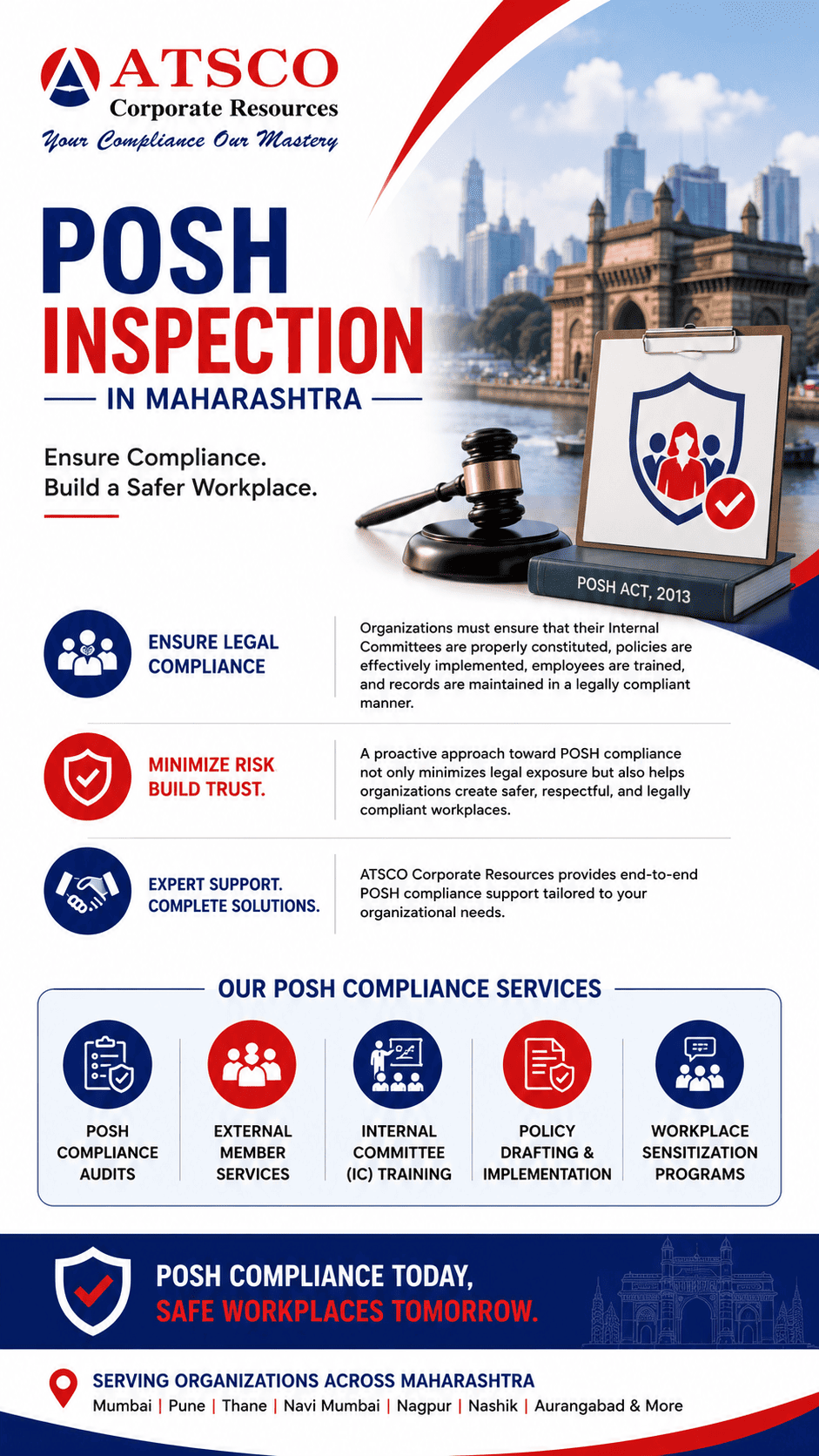
Organizations must ensure that their Internal Committees are properly constituted, policies are effectively implemented, employees are trained, and records are maintained in a legally compliant manner.
A proactive approach toward POSH compliance not only minimizes legal exposure but also helps organizations create safer, respectful, and legally compliant workplaces.
For organizations seeking assistance with POSH compliance audits, External Member services, IC training, policy drafting, or workplace sensitization programs, ATSCO Corporate Resources provides end-to-end POSH compliance support tailored to organizational requirements.
Why Choose ATSCO Corporate Resources?
Experience and Expertise
With 18 years of experience, ATSCO Corporate Resources is a trusted labour law consultancy firm, serving 50+ corporates across diverse industries
Comprehensive Services
Providing end-to-end functions of payroll services, including time and attendance management and leave processing
Skilled Team
Emphasize the expertise of the team in handling complex payroll issues